Image credit: Jakchai Tilakoon/EyeEm/Getty Images
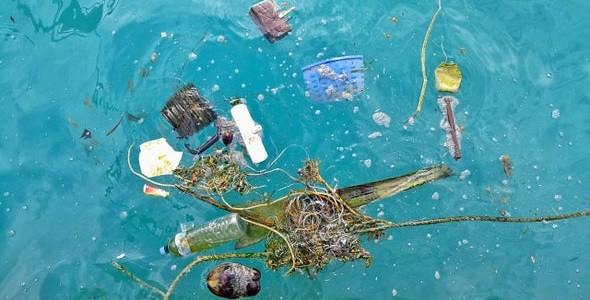
Raise your hand if you think that the tons and tons of plastic garbage floating in the Pacific Ocean are a good thing, something to be preserved and protected. Nobody? No hands up? Good. We all know that it’s ugly and harmful to wildlife; there’s no controversy there. Now, new research shows that it’s even worse than we imagined. Scientific American science writer Meghan Bartels describes a newly researched threat posed by the Great Pacific Garbage Patch in this April 2023 report.
Read it here.
EXPLORE, REFLECT, SPEAK UP.
1. What new findings about the harmful effects of plastic debris in the ocean does Bartels report? Why is it so alarming? Summarize the report. Do you agree that the findings are alarming or is Bartels just being dramatic? Explain your reasoning.
2. Bartels is reporting on research that had just been published in a scientific journal. In addition to interviewing Linsey Haram, the lead researcher, Bartels consults two other scientists for her report—a marine biologist and a marine microbiologist—and she is careful to note that neither was involved in Haram’s research. Why might she have consulted these additional sources? Did they rebut or call into question any of Haram’s reported results? Do you think Bartels’s inclusion of these additional source was a good rhetorical choice? Why or why not? Explain your reasoning.
3. LET’S TALK. We know you aren’t throwing any plastic trash into the ocean or any other living body of water. You would never. But is that enough? Is being very careful about how you dispose of plastics enough of an effort to keep the floating garbage problem from getting worse? Would you be willing to do more? And if so, what might it be? Talk with a few classmates about personal effort and community effort. The idea here is to generate ideas, explore possibilities, and identify limitations—not to praise anyone, shame anyone, or cause discomfort.
4. AND NOW WRITE. Even cautious and legitimate international commerce presents opportunities for organisms to “hitch a ride” and establish themselves in new territories. In fact, it’s arguably been happening ever since long-distance trading began many centuries ago. So what’s the big deal about the new communities of organisms that Bartels reports on? Is this kind of migration different? Is it truly alarming? Write an essay in which you address these questions and argue for your position. You may wish to do further research on the topic, but it’s not necessary. You are writing as a reasonably well-informed adult drawing on their own general knowledge and also possibly some specific regional experience and comparable examples.
 LetsTalkLibrary