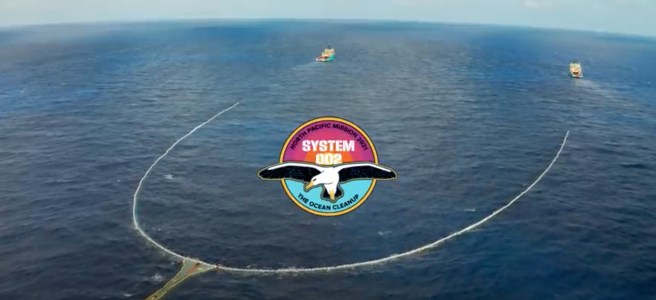
Image credit: The Ocean Cleanup
Have you heard of the Great Pacific Garbage Patch? No, it’s not something from Sesame Street (although it sounds like it could be). It’s big, it’s in the middle of the ocean, it’s garbage-y. And it’s real. Ocean Cleanup is an organization that uses innovative techniques to clean up the patch. In addition to their website, they have numerous YouTube videos that explain their techniques and their progress. For our Library, we’ve chosen this short one from October 2021.
Read it here.
EXPLORE, REFLECT, SPEAK UP.
1. What is the purpose of Ocean Cleanup’s video? Who is the intended audience? What clues or evidence did you use in order to arrive at your responses? How well do they achieve their purpose? How did you arrive at your conclusion? Explain your thinking.
2. Ocean Cleanup’s video never names the entity known as the Great Pacific Garbage Patch, and it doesn’t really give any background at all about what they’re doing. Is the explanation in the video clear enough without that context? Why or why not? Do you think the video should have provided more context? Why or why not?
3. LET’S TALK. Did the video stimulate your curiosity? What more would you like to know about the Garbage Patch or about Ocean Cleanup? Did you look at any of the other Ocean Cleanup videos on YouTube or did you google anything to help you make sense of what you were seeing? Might you like to join the crew on one of its expeditions as a worker, observer, or reporter? Why or why not? Talk with a few classmates about your ideas and impressions of Ocean Cleanup’s work. Are you impressed with their mission? their methods? their public communications? Why or why not? Did any of your classmates’ statements surprise you? Did any statements get you to rethink your ideas?
4. AND NOW WRITE. How does all that plastic end up in the middle of the ocean? The short answer (and do feel free to look it up and confirm) is that it comes from local creeks, streams, and rivers on to larger and larger waterways, and eventually, the ocean. In other words, a plastic bottle cap that slips out of your hand on the street and rolls into a storm grate that empties into a lake, a potato chip bag that blows off the picnic table and into the creek before you can grab it—those things can end up spending decades and more floating in the ocean. What, if anything, is your local community doing to clean up the waterways under its jurisdiction? Do some research to find out what’s going on in your town or area. You may want to use the library, online resources, newspaper archives, and/or interviews with local authorities and activists. Write a report detailing what you learn, and if appropriate, make recommendations for future action.
 LetsTalkLibrary