
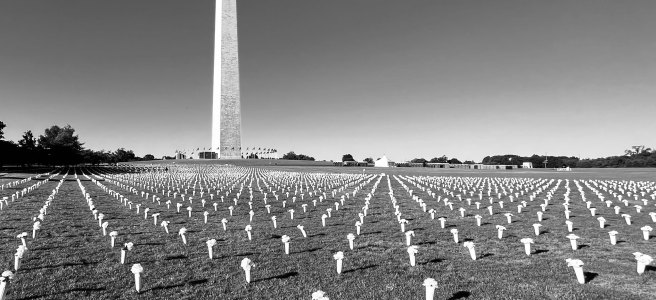
Image credit: Joe Flood
It’s not news to any of us that mass murders are alarmingly common here in the US. Most of us can rattle off place names—Sandy Hook, Uvalde, Parkland, Las Vegas, and numerous others. Many of us can name shooters, and sometimes we remember the names of the people whose lives were so senselessly ended. But those are names and words; what about images? For many good reasons, news organizations seldom publish photos or video of the grisly scenes. In November 2023, however, the Washington Post, a large-circulation daily newspaper, published mass shooting photos and interview snippets in a report titled “Terror on Repeat: A rare look at the devastation caused by AR-15 shootings.” The Post’s report was so unprecedented that Nieman Lab, a journalism watchdog and research organization affiliated with Harvard University, documented the process that the Post followed in a November 2023 report written by Nieman Lab’s deputy editor, Sarah Scire.
Read it here.
EXPLORE, REFLECT, SPEAK UP.
1. This Nieman Lab article examines a specific Washington Post report, and a link to that report is given at the beginning of the second paragraph. Did you, at any time, follow the link to view the Post’s report? Why or why not? Be able to explain your thoughts and feelings. (There are no “wrong” responses here. Answering this question first may help you to address the questions and exercises that follow.)
2. Both the Post and Nieman Lab take the position that increased public awareness of the reality of the carnage produced by mass murders with AR style weapons could stimulate enough indignation to effect policy changes. They also acknowledged that viewing images of mass murders might, over time, cause people to “simply become numb to them.” How effectively does Scire argue the position that viewing such photos and videos is ultimately in the public interest? Explain the reasoning behind your response.
3. Sarah Scire quotes the Washington Post’s executive editor Sally Buzbee saying, “We do think there’s a legitimate debate here about the accountability nature of what happens at a crime scene versus the sensitivity to victims.” What does Buzbee mean by that statement? What, exactly, is the debate? Does Scire approve of how the Post dealt with the debate? Is Scire’s report fair to the Post? Why or why not? Explain your responses and provide examples from the Nieman Lab report to support your ideas.
4. LET’S TALK. One of the delicate and complicated aspects of the decision to publish photos is the question of recognizability. The Post decided to secure permission from surviving family members before publishing any photo of a victim who could be recognized, and some families granted that permission. In the end, however, despite having survivors’ permission, the Post declined to publish any identifiable photos. There is a lot to consider here. On the one hand, seeing such photos could be retraumatizing to family members and others; on the other hand, family members (and other concerned people) may hope to stimulate awareness and action that could help prevent future events. What are your thoughts and feelings about the difficult question of publishing identifiable photos? Discuss your responses with a few classmates. (And remember that your goal here is to explore all the twists and curves of a complicated issue, not to persuade or debate any single position.)
5. AND NOW WRITE. Scire notes that while researching their report, Post journalists filed numerous public records requests for “medical examiner records, crime scene photographs, police body-camera footage, court records” and more. Most of those requests were rejected by officials who cited legal exemptions and personal privacy in their refusal to comply. Privacy is certainly an important consideration; so are public awareness and public safety. Precisely because the debate is so difficult, it merits our thorough examination. What do you think? Write an essay that takes a position on the following questions: Is it within the public’s rights and interests to be able to view and examine the kinds of records that the Post requested? What kinds of information should be freely released? What kinds should be protected from public knowledge and examination? Support your ideas with evidence from Scire’s report, from the Washington Post, or from any source you find relevant.
 LetsTalkLibrary