All Praise to the Lunch Ladies

Image credit: Houston Cofield | The Bitter Southerner

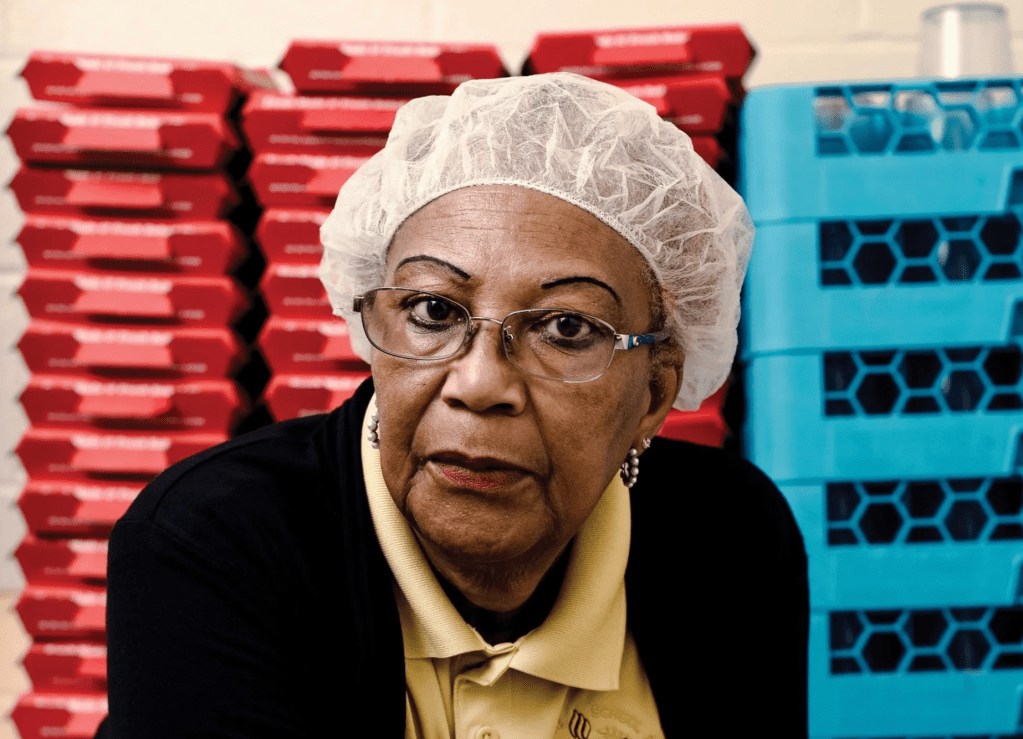
Do you remember eating lunch in the school cafeteria? If so, did you have any favorite foods, and do you remember any of the ladies who worked in the lunch line? Maybe you’ve heard jokes about both the food and the “lunch ladies” who serve it (think Adam Sandler singing “yesterday’s meatloaf is today’s Sloppy Joes” in a song called “Lunch Lady Land”).  But have you ever stopped to think about what it takes to get the food for that meat loaf into the schools—and about what those women do to make sure that every student gets lunch? Jennifer Justus has. She’s a food writer whose grandmother worked in a school cafeteria, and she’s written this photo essay analyzing the politics and policies that make getting food to the schools so complicated and describing how lunch ladies ensure that no students go hungry—arguing that these women are in fact “heroes of the school lunch line.” This essay first appeared in 2025 in The Bitter Southerner, a media company that publishes stories, books, and photo essays about the American South.

Continue reading “All Praise to the Lunch Ladies”
$4,785. That’s How Much It Costs to Be a Sports Fan Now.

Illustration by Andrew Rae | The New York Times

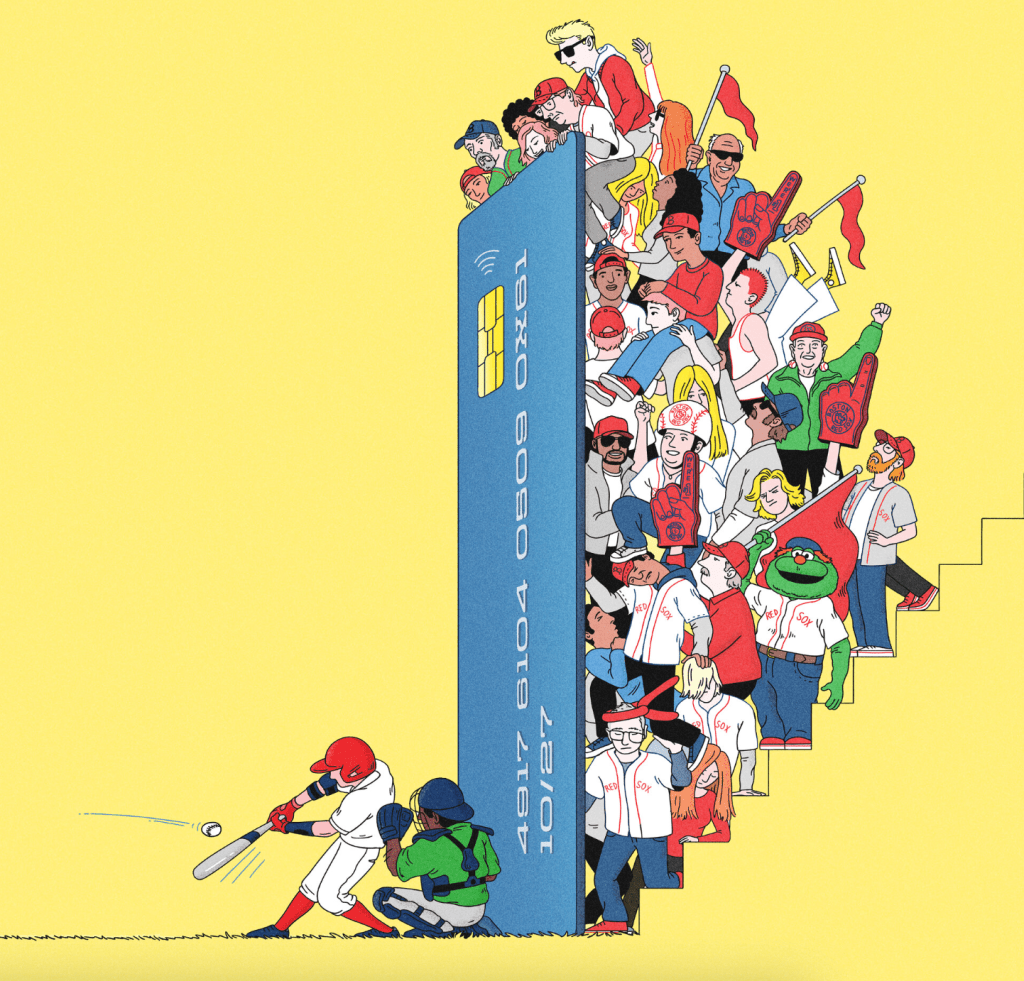
It’s no secret that affordability is a big concern in the United States. The prices of eggs, coffee, and even candy bars have been going up, up, up—and the same is true of seats and even hot dogs at a baseball game. According to Joon Lee, the price of being a sports fan now is—brace yourself—$4,785. Lee is a sports journalist whose work has appeared on ESPN, Bleacher Report, and YouTube, as well as in the Boston Globe and the New York Times, where this piece was first published in 2025. He says his goal is “to make sports media feel alive again.” Read on to see what he has to say about the price of being a sports fan; fair warning: it’s no longer as simple as “Buy me some peanuts and Cracker Jack.”

Continue reading “$4,785. That’s How Much It Costs to Be a Sports Fan Now.”

Is 67 Just Brain Rot?

Image credit: languagejones | YouTube

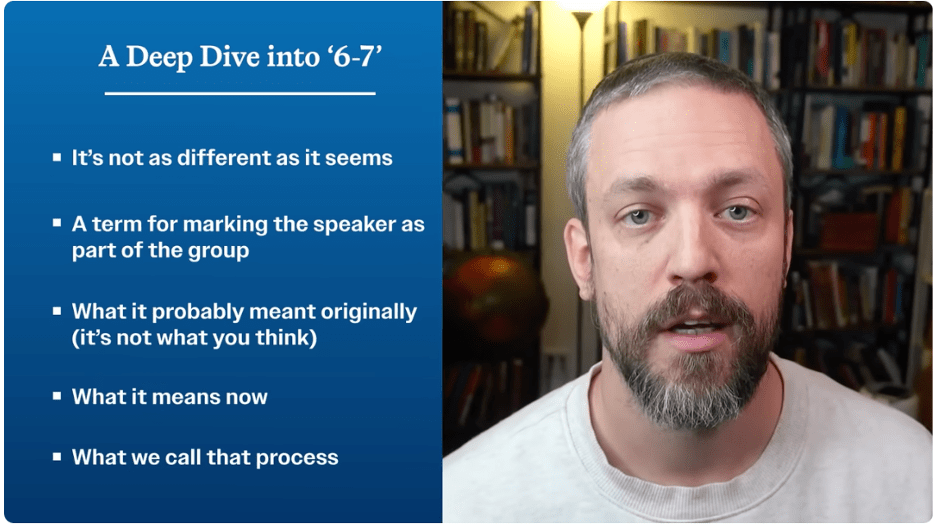
What do you know about 67? It’s all overTikTok. Dictionary.com chose it as the 2025 Word of the Year. One preschool teacher told us it’s hard now to teach how to count to ten, that students all start shouting when they get to 6 and 7. So it’s popular slang, but do you have any idea what it means? According to some, it has no meaning—and some even call it brain rot. According to linguist Taylor Jones, however, “there’s actually a lot more to it.” In his 2025 video, linguist Taylor Jones traces the origins of 67 and complicates the impulse many “mature folks” have to dismiss its significance. Watch the video to learn how the mysterious origins of 67 is part of a larger pattern in the development of slang and the evolution of language.  

Continue reading “Is 67 Just Brain Rot?”

The River House Broke. We Rushed in the River.

Image credit: Jordan Vonderhaar | TexasMonthly

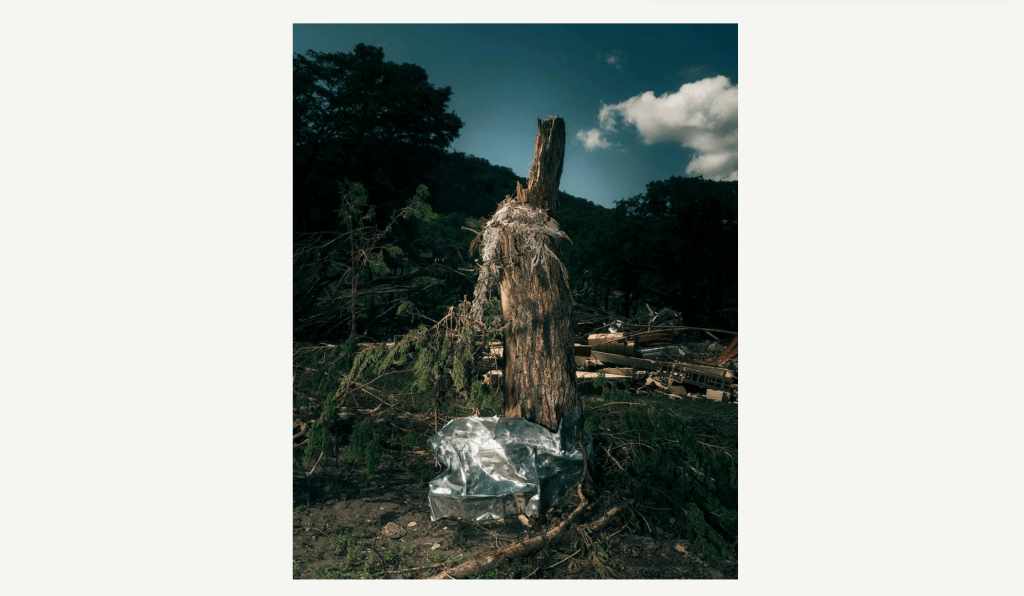
No matter where you live, it’s a pretty good bet that you’ve experienced some extreme weather: heat waves, snowstorms or avalanches, tornadoes or hurricanes, cyclone bombs, drought, flooding. In 2006, Yale Climate Connections reported that the United States was facing a billion-dollar disaster roughly every two weeks. Aaron Parsley feels this statistic in his bones, as you’ll see in his first-hand account of the nightmare he and his family experienced during the deadly flooding of the Guadalupe River on July 4, 2025, when 135 people lost their lives. But statistics are just numbers, numbers that can scarcely capture what it feels like to be caught up in such an event, fighting to stay alive. With words and images, Parsley’s report takes us way beyond statistics, into the very eye of the storm he lived through. Parsley’s article was published on July 10, 2025 in the Texas Monthly, where he serves as a senior editor.

Continue reading “The River House Broke. We Rushed in the River.”

Ghosts

Illustration by Jesse Zhang | The Believer

Do you remember a crucial moment or event in your life that you really wanted to write about—maybe to help you understand it more fully? Yet no matter how hard you tried, you just couldn’t find the words? That’s what happened to Vauhini Vara, whose sister was diagnosed with cancer when they were both in high school. Her death four years later left Vara feeling like a ghost, one who was unable to write about her sister’s death. That’s when she, a reporter and editor, turned to a relatively new kid on the technology block: Chat GPT. Read on to see what happened when Vara asked AI to take over and write about her sister’s death for her. Be prepared for more than a few surprises! Vara’s essay was first published in 2021 in The Believer, a quarterly arts and literature magazine.

Continue reading “Ghosts”