Why Is Blue So Rare in Nature?

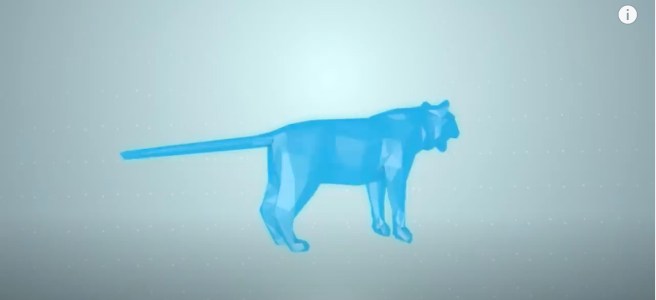
A blue 3D computer generation of a feline.

Why are there no blue tigers? Come to think of it, there are no blue rabbits or squirrels, either. You’ve probably never lost any sleep pondering these questions, but in case you’re just curious, we’ve got some answers for you! Molecular biologist and science writer Joe Hanson made this 2018 video as an episode in his series It’s Okay To Be Smart, a project of PBS Digital Studios.

Continue reading “Why Is Blue So Rare in Nature?”

How We Tell Stories in Texas

Shape of Texas on a red background, superimposed with various historical documents related to the state.

What do you remember learning in school about the history of your town or state? Did it give you a sense of pride? Now that you’re older and wiser, have you discovered anything that was left out (but probably shouldn’t have been)? In this July 2021 essay in Bitter Southerner, freelance writer and Texas native Sarah Enelow-Snyder writes about her exciting seventh grade field trip to the Alamo in San Antonio along with her critique of the ways that history is (and isn’t) taught in school.

Continue reading “How We Tell Stories in Texas”

Making Gender-Neutral Emojis Is More Complicated Than You Think

Picture this: a teacher and a farmer are playfully chatting at a party. You got the image? OK, now here’s a question: in the mental picture you just created, does the farmer have a gender? Does the teacher? English doesn’t require gender marking on those two words the way that many other languages do. Still, all of us who are adults today have been deeply socialized to automatically apply a gender to any other human we encounter, even imaginary ones. That socialization is changing, of course, but while we’re in the midst of the changes, life can get a little complicated. Even emojis can have a hard time; in this November 2020 Wired report, freelance journalist Shira Telushkin explains the complications.

Continue reading “Making Gender-Neutral Emojis Is More Complicated Than You Think”

The Science behind Social Media’s Hold on Our Mental Health

Reaction toolbar with thumbs up, heart, laughing, surprised, sad, and angry emojis.

We’ve been hearing for a while now that social media can have damaging effects on users’ mental health and sense of well-being. If we’re being honest, we probably have noticed some effects on our own selves that are not so desirable. What’s happening to cause that? Has all of humanity, and especially young people, just gone bonkers for social media? That’s not a very satisfying possibility, is it? Brittney McNamara, Teen Vogue’s features director, offers a better explanation in this November 2021 report.

Continue reading “The Science behind Social Media’s Hold on Our Mental Health”

What It Means to Be From Two Places at Once

A surfer wearing a red "Vans" shirt rides a wave.

If you were selected to compete in the Olympics, what country would you represent? For many athletes, the question would never even come up, but that’s not true for everyone. Mahina Maeda, Hawaiian born and raised, participated in the first-ever Olympic surfing competition, representing Japan. In this July 2021 essay in the Players’ Tribune, she explains that she is “more than one flag, one country, one language.” (You can click the link at the top of her essay to read it in Japanese.)

Continue reading “What It Means to Be From Two Places at Once”

Women of Letters

A black and white photo of an older couple.

Do you have a middle name? Not everybody does. Some people have two or more. If you have one, do you use it? Do you shorten it to an initial? In the US, we have some leeway in the ways that we identify ourselves, so you may have encountered these questions already in your own life—what name to put on, say, a job application or an apartment rental contract. Deborah Cameron, a feminist linguist who pays attention to many aspects of language use, wrote this July 2021 post about names for her blog, Language: a feminist guide. (By the way, she writes her blog under the name debuk.)

Continue reading “Women of Letters”

G Is for Gabi

A child lies on a bed reading a Fodor's guidebook to Washington, DC.

When his family moved from one country to another, a boy’s whole relationship to his name changed. We bet that wasn’t the consequence you expected to read after the dramatic first part of that sentence, but think about it: we carry a lot of drama in our names. Johns Hopkins University student Gabriel Lesser was that boy; read his account in this April 2021 narrative in the university’s News-Letter

Continue reading “G Is for Gabi”

How Do Dogs Sniff Out Diseases?

A brown dog's nose pointed upward against a yellow background.

Dogs know the world through their exquisitely sensitive noses, and humans have been relying on dogs’ sense of smell to help with many different kinds of tasks (not always benevolent) for a long time. Dogs are trained to sniff out contraband at airports and international borders; dogs are instrumental in finding black truffles and other valuable wild mushrooms; and dogs are also trained to detect an imminent epileptic seizure before it occurs . Presently, scientists are developing training programs for dogs to sniff out COVID. In this July 2021 Discover Magazine report, science journalist Leslie Nemo analyzes the procedures that trainers and researchers follow to teach the necessary skills to the dogs. 

Continue reading “How Do Dogs Sniff Out Diseases?”