Warped Front Pages

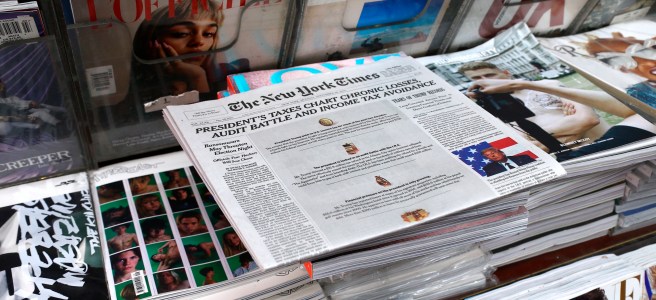
Stacks of thick and glossy fashion magazines on a newstand. A copy of the New York Times is displayed on top of the magazine stacks.

Image credit: Charles Guerin/Abaca/Sipa USA(Sipa via AP Images)

Do mainstream, large-circulation daily newspapers offer non-biased coverage of national news? Good question. Depending on whom you ask, responses will probably be Hard Yes, Hard No, and all points in between. To find a more concrete and precise answer to the question, a team of research analysts made a systematic study of the front pages of two major national newspapers, the New York Times and the Washington Post, during two specific periods leading up to national elections. David M. Rothschild is senior principal researcher at Microsoft Research; his four co-authors include academics and researchers. Their report was published by the Columbia Journalism Review, an online research and watchdog organization, in November 2023.

Continue reading “Warped Front Pages”

Why Are All Action Heroes Named Jack, James, or John?

A collage of action heroes Capt. James T. Kirk, Johnny Utah, James Bond, John Wick, Jack Ryan, Jason Bourne, and John James Rambo.

Image credit: Photo illustration by Natalie Matthews-Ramo/Slate. Photos by David Lee/Lionsgate, MGM, Amazon Prime Video, NBC, Universal, Twentieth Century Fox, and Yoni S. Hamenahem/Wikipedia.

“Bond. James Bond.” Such a recognizable movie quote even though it has no punchline, makes no clever point. Does it matter that his name is James and not, say, Clive (very English!) or Butch (very strong and also alliterative)? Such a silly question. But of course it matters; at least, his name follows a definite pattern of action hero names. Demetria Glace, data researcher and author, investigates a pattern she has observed in the names of action heroes in this March 2023 report in Slate.

Continue reading “Why Are All Action Heroes Named Jack, James, or John?”

How Online Mobs Act Like Flocks of Birds

Still frame from a computer simulation of a murmuration of birds swooping and swirling across the screen.

Image credit: Noema

Have you ever watched a group of birds flying together, making swirling, looping patterns in the sky, and thought, “Wow! I wish we humans could do that!”? Well, we kind of already do, at least on social media. Renée DiResta, technical research manager at Stanford Internet Observatory, uses the metaphor of a murmuration of birds (that’s what it’s called) to describe our social media behavior. In this November 2022 essay in Noema, she analyzes some of our most problematic social media behavior and makes some recommendations for addressing the problems.

Continue reading “How Online Mobs Act Like Flocks of Birds”

Am I Wrong to Judge People for Talking to Me in Emoji?

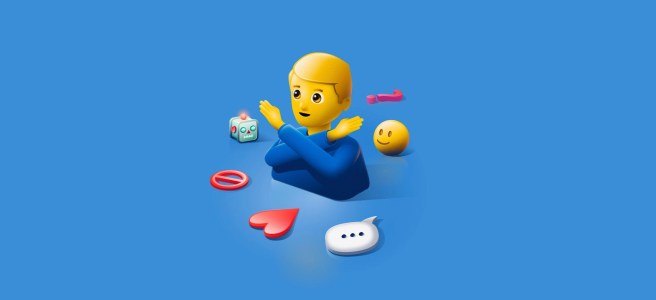
A cartoonish drawing of an emoji-style person, shown from the chest up, arms crossed with hands raised, surrounded by six smaller emojis.

Image credit: Jan Siemen

Advice columns are a consistently popular media feature, and there are many types—advice about romance, pet care, money management, workplace relationships, and more. Wired, a magazine that covers assorted aspects of cybertechnology, publishes an advice column about—what else—technology. In this September 2022 column, Meghan O’Gieblyn (writing under the pen name “Cloud”) addresses a rather snotty question about emoji, and her response may surprise you.

Continue reading “Am I Wrong to Judge People for Talking to Me in Emoji?”

The “Great Resignation” Is Finally Getting Companies to Take Burnout Seriously. Is It Enough?

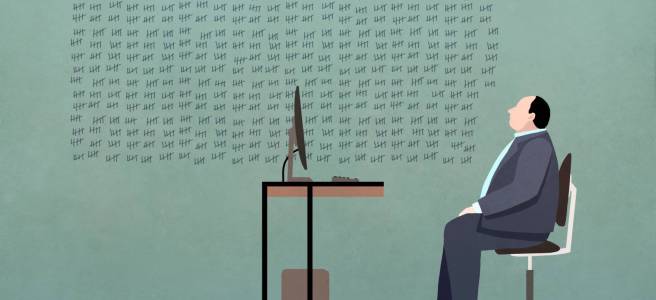
An illustration of a man sitting at a desk looking at a computer monitor surrounded by tally marks.

They’re calling it the Great Resignation, and it’s all over the news these days. So many people quitting their jobs! What’s going on?! Pundits and analysts are looking from every angle, trying to get a handle on what may (or may not) be a huge trend here in the US at the end of 2021. In this October 2021 article, Time Magazine’s health correspondent Jamie Ducharme analyzes the situation, focusing on worker burnout, and offers suggestions for workers and their employers.

Continue reading “The “Great Resignation” Is Finally Getting Companies to Take Burnout Seriously. Is It Enough?”

Why Are So Many Americans Quitting Their Jobs?

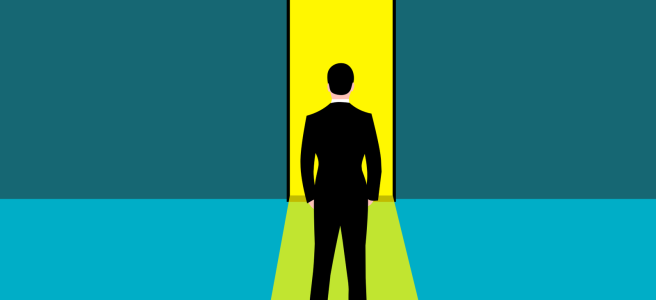
An illustration of a man with his back to us facing an open door marked "Exit."

Has the pandemic changed you? What a silly question! Of course it has. Ahhh, but how deeply? In what ways? That question can’t be answered yet, and we may not be able to know for a very long time. In this October 2021 report, writer and journalist Greg Rosalsky, who covers a variety of financial topics for NPR’s Planet Money, investigates some of the reasons for the long arc of pandemic consequences, including the current phenomenon known as the Great Resignation.

Continue reading “Why Are So Many Americans Quitting Their Jobs?”

Why Is Blue So Rare in Nature?

A blue 3D computer generation of a feline.

Why are there no blue tigers? Come to think of it, there are no blue rabbits or squirrels, either. You’ve probably never lost any sleep pondering these questions, but in case you’re just curious, we’ve got some answers for you! Molecular biologist and science writer Joe Hanson made this 2018 video as an episode in his series It’s Okay To Be Smart, a project of PBS Digital Studios.

Continue reading “Why Is Blue So Rare in Nature?”

The Science behind Social Media’s Hold on Our Mental Health

Reaction toolbar with thumbs up, heart, laughing, surprised, sad, and angry emojis.

We’ve been hearing for a while now that social media can have damaging effects on users’ mental health and sense of well-being. If we’re being honest, we probably have noticed some effects on our own selves that are not so desirable. What’s happening to cause that? Has all of humanity, and especially young people, just gone bonkers for social media? That’s not a very satisfying possibility, is it? Brittney McNamara, Teen Vogue’s features director, offers a better explanation in this November 2021 report.

Continue reading “The Science behind Social Media’s Hold on Our Mental Health”