
What I Learned as a Liberal Faculty Adviser for a Turning Point USA Chapter

Image credit: Ricardo Tomás | The New York Times

Imagine being asked to work with an organization whose goals you strongly oppose. That’s what happened to Nicholas Creel, a professor of business law at Georgia College & State University, when a student asked him to be the adviser for their college’s chapter of Turning Point USA. It was not something he would have thought to do, but his “dedication to the principles of free speech” led him to see it as a request he could not turn down. So, he said yes, “despite disagreeing with virtually every position the organization holds.” Read on to find out how it all turned out, in a 2025 piece he wrote for the New York Times. You may be surprised.  

Continue reading “What I Learned as a Liberal Faculty Adviser for a Turning Point USA Chapter”

A.I. Is Homogenizing Our Thoughts

Illustration credit: Ariel Davis | The New Yorker

“A vacuous and dangerous echo chamber.” “Best creative booster ever!”  “An existential threat to humanity.” Whether you love it or hate it—or fall somewhere in between—it’s likely that you have used generative AI yourself. But is it a good idea to be doing so? And what will be the consequences of that use? In this June 2025 piece from The New Yorker, staff writer Kyle Chayka, who covers technology and internet culture, reports on recent studies that offer potential answers to these questions! 

Continue reading “A.I. Is Homogenizing Our Thoughts”

AI, Ain’t I A Woman?

Image credit: Joy Buolamwini

Can artificial intelligence technology guess the gender of Oprah, Serena, Michelle, and other iconic women? That’s the question Canadian computer scientist and founder of the Algorithmic Justice League Joy Buolamwini poses in this three-and-a-half minute YouTube video.  Before you watch the video, what do you think the answer will be, especially given that the three women Buolamwini mentions are so well known that she can omit their last names? Now click “play.” 

Continue reading “AI, Ain’t I A Woman?”

A Guerilla Gardener in South Central LA

Image credit: TED

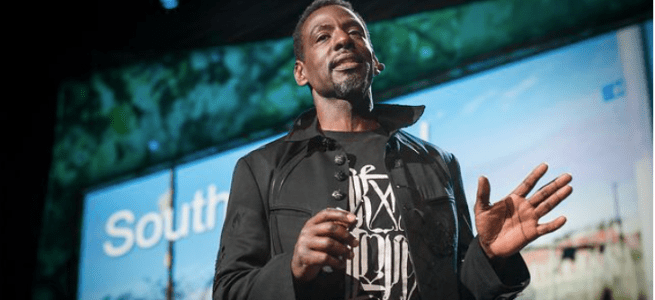
How would you feel if you had no way of getting healthy food? Not good, right? That was the situation in South Central Los Angeles, one that Ron Finley set out to correct. He started by planting a vegetable garden on a strip of land between his house and the street. His 2013 TED Talk describes what happened after that.

Continue reading “A Guerilla Gardener in South Central LA”

That’s Not Actually True

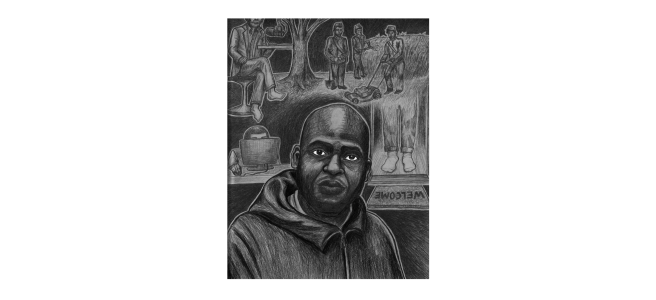
A charcoal drawing with Kiese Laymon’s face in the center surrounded by four smaller images from the essay: a person behind a computer screen, Laymon in stocking feet sitting with a microphone, confederate soldiers doing lawn work, and a figure in stocking feet standing in a doorway behind a Welcome mat.

Image credit: Billy Dee

Today is Tuesday. That’s not actually true. Well, it might be. It depends. The truth is, well, complicated sometimes. Kiese Laymon, who describes himself as a “Black southern writer,” is an English professor and winner of several prestigious awards including the 2022 MacArthur Genius Grant. His novels and essays explore conditions of race, class, body image, and more. In this 2019 essay from Scalawag magazine, he deftly employs the refrain “that’s not actually true” to explore some of the jagged boundaries between experience and expectation, reality and perception, and history and possibility, all regions where everything gets tossed together in a jumble of contradictions. His conclusion makes clear, however, that what he is actually addressing are the effects of centuries of racism embodied in the inner life of a 21st century Black southern writer.

Continue reading “That’s Not Actually True”

Why So Many Baseball Players Are Dominican

Nine Dominican youth league players, in uniform, sitting in their dugout.

If you pay any attention to major league baseball (or even if you don’t), you’ve probably noticed that a disproportionately large number of star players are from the Dominican Republic, the Caribbean nation that shares its island with Haiti. Is that a coincidence? Are Dominicans just naturally and inexplicably gifted at the game of baseball? Well, no and (probably) no. The explanation involves much more than just sports; to get the full story, a Vox investigative team dug into two centuries of history and economics that involve, among other things, the Atlantic slave trade, the Cuban revolution, the business of baseball, and sugar. This video report was published in July 2023.

Continue reading “Why So Many Baseball Players Are Dominican”

How Hair Discrimination Affects Black Women at Work

Black and white photo of a young Black woman with an elaborate hairdo shown from the neck up; the background is solid green with purple dots.

Image credit: HBR Staff/Suad Kamardeen/Unsplash

A person’s job may involve talking with clients, solving logistical problems, operating a drill press, analyzing data, supervising a team of interns, or any of a zillion other workplace tasks. What does their hairdo have to do with their job performance? Silly question? Think again. Janice Gassam Asare, writer and CEO of a diversity consulting firm, discusses the everyday reality of hair discrimination faced by Black women in the workplace, and she lays out some concrete steps for addressing the problem. Her May 2023 report appears in the Harvard Business Review.

Continue reading “How Hair Discrimination Affects Black Women at Work”

LSU’s Angel Reese, Iowa’s Caitlin Clark, and the Double Standards of Race in Sports

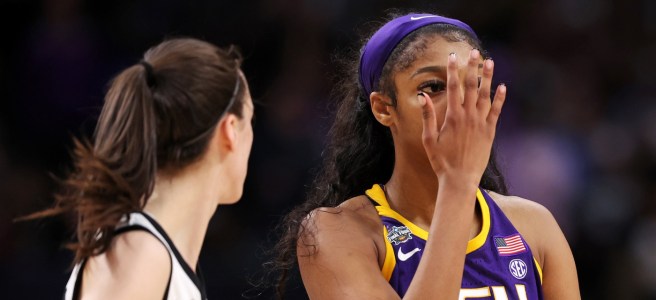
LSU forward Angel Reese making the “you can’t see me” gesture in front of Iowa guard Caitlin Clark during an NCAA championship game in 2023.

Image credit: MADDIE MEYER/GETTY IMAGES

A basketball player waves their own hand in front of their own face and gets called out for behavior that some reports and social media posts called “thuggish.” Wait. What? Did that really happen? Well, yes, it did. Here’s the context: an NCAA tournament championship game, two top teams, each with a top-notch star player. So far, nothing remarkable, right? Ah, but did we mention that it was a women’s game? And that the hand-waving player was a Black woman leading a mostly Black team from a school in the South, while the other star player was a White woman leading a mostly White team from the Midwest? Is it making sense yet? Award-winning sports journalist William Rhoden details the situation and adds his own argument in this April 2023 Andscape essay.

Continue reading “LSU’s Angel Reese, Iowa’s Caitlin Clark, and the Double Standards of Race in Sports”