What I Learned as a Liberal Faculty Adviser for a Turning Point USA Chapter

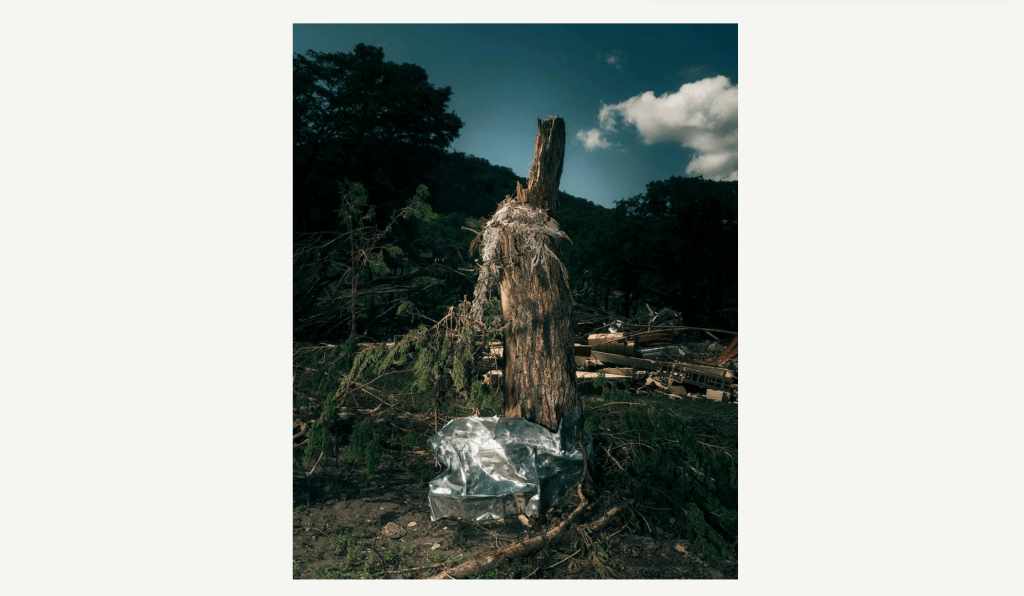
Image credit: Ricardo Tomás | The New York Times

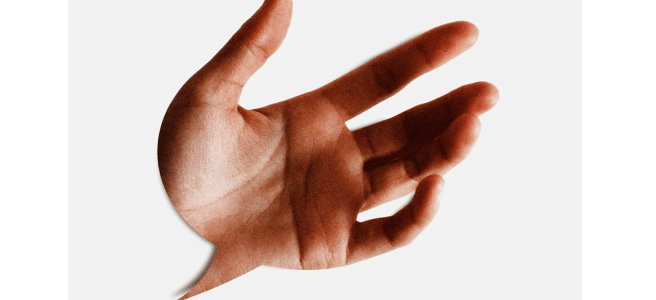
Imagine being asked to work with an organization whose goals you strongly oppose. That’s what happened to Nicholas Creel, a professor of business law at Georgia College & State University, when a student asked him to be the adviser for their college’s chapter of Turning Point USA. It was not something he would have thought to do, but his “dedication to the principles of free speech” led him to see it as a request he could not turn down. So, he said yes, “despite disagreeing with virtually every position the organization holds.” Read on to find out how it all turned out, in a 2025 piece he wrote for the New York Times. You may be surprised.  

Continue reading “What I Learned as a Liberal Faculty Adviser for a Turning Point USA Chapter”

Did Usher Write His Own Commencement Speech? (Yeah!)

Image credit: Emory University

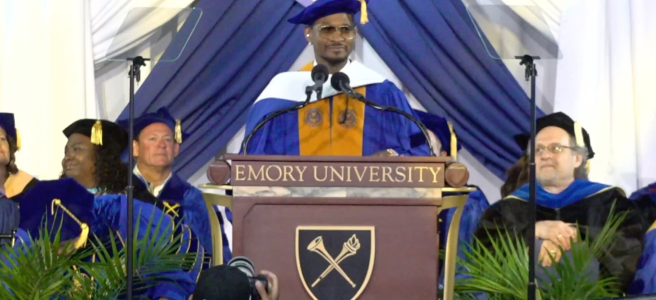
Have you ever had to make a presentation or give a speech that meant a lot to you, one in which you hoped to hit just the right note, make just the right connections, leave just the right impression? If so, you probably worked hard on it, revising over and over, getting advice, tweaking it right up to the last moment. Pretty much like Usher did for his 2025 commencement address at Emory University, though he had a publicist and team of professional advisers while you probably relied on friends or family members. In this New York Times article from May 2025, national correspondent Alan Blinder takes a close-up look at Usher’s speech composing process, trying to capture the recursive dynamic that drove Usher from start to finish. Here’s your chance to experience some of that process—and perhaps compare it to your own. 

Continue reading “Did Usher Write His Own Commencement Speech? (Yeah!)”

A Guerilla Gardener in South Central LA

Image credit: TED

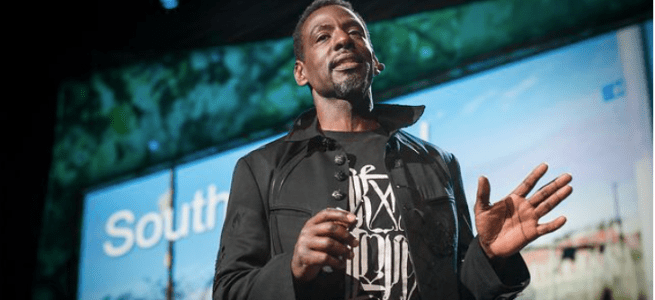
How would you feel if you had no way of getting healthy food? Not good, right? That was the situation in South Central Los Angeles, one that Ron Finley set out to correct. He started by planting a vegetable garden on a strip of land between his house and the street. His 2013 TED Talk describes what happened after that.

Continue reading “A Guerilla Gardener in South Central LA”

I Feel So Ugly without My Makeup On

Image credit: Buse Koldas

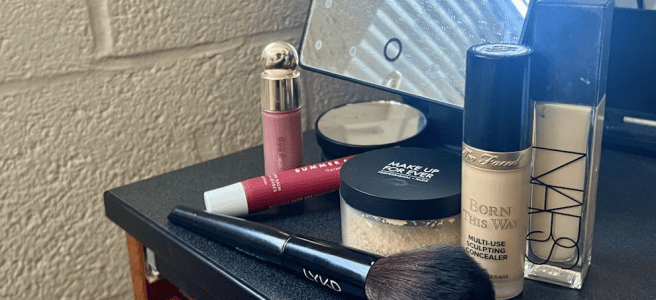
Throughout history and in widely differing cultures around the world, people have used various kinds of makeup to mark or adorn themselves. Why? Answers to that question vary according to time and place, of course, but how about in our time and place: twenty-first century college campuses in the US? Enter Buse Koldas, a student from Istanbul who was in her first year at Johns Hopkins University, studying computer science and engineering, when she wrote about what makeup has meant to her for the Johns Hopkins News-Letter in 2024.

Continue reading “I Feel So Ugly without My Makeup On”

Philip Gove and “Our Word”

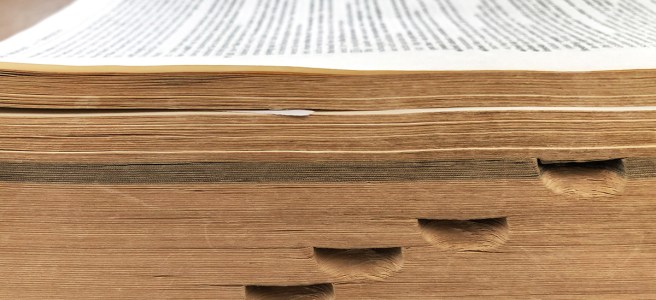
Closeup view of a large dictionary viewed from the side. The book is open, and the yellowed edges of pages with thumb tabs are visible.

Image credit: Rosmarie Voegtli (rvoegtli/Flickr)

If we think about dictionaries at all, we mostly tend to think about them in a fairy tale way—that is, they simply appear, whole and complete, in the fullness of their power, delivered by some mythical being, probably one with wings. But where do dictionaries come from? Who writes them? What words are worthy of inclusion? Who knows? Their very authority defies questioning. But that’s silly, isn’t it? Of course humans make dictionaries, and it’s no small task. Like other grand human activities, dictionary-making involves a lot of debate, controversy, and passionate argument. In this November 2023 essay from American Scholar, writer, editor, and language scholar David Skinner shares a dictionary story that is, well, f*ckin’ epic.

Continue reading “Philip Gove and “Our Word””

Love It or Lose It: The Cycle

Photo of a brightly colored bird with a long beak perched on a branch. Superimposed on the image in large lower case letters are the words “love it or lose it”; beneath the words is the logo of the World Wildlife Fund, and below that, the URL wwf.org/love.

Birds are terrific, aren’t they? We like them. Some people even hang bird feeders in order to be able to see and hear birds more often. But then maybe those same people might unthinkingly kill the insects that the birds enjoy eating. Oops. In this short 2021 video, the World Wildlife Fund shows how all of nature is interconnected and comes around full circle to make one continuous chain of life.

Continue reading “Love It or Lose It: The Cycle”

That’s Not Actually True

A charcoal drawing with Kiese Laymon’s face in the center surrounded by four smaller images from the essay: a person behind a computer screen, Laymon in stocking feet sitting with a microphone, confederate soldiers doing lawn work, and a figure in stocking feet standing in a doorway behind a Welcome mat.

Image credit: Billy Dee

Today is Tuesday. That’s not actually true. Well, it might be. It depends. The truth is, well, complicated sometimes. Kiese Laymon, who describes himself as a “Black southern writer,” is an English professor and winner of several prestigious awards including the 2022 MacArthur Genius Grant. His novels and essays explore conditions of race, class, body image, and more. In this 2019 essay from Scalawag magazine, he deftly employs the refrain “that’s not actually true” to explore some of the jagged boundaries between experience and expectation, reality and perception, and history and possibility, all regions where everything gets tossed together in a jumble of contradictions. His conclusion makes clear, however, that what he is actually addressing are the effects of centuries of racism embodied in the inner life of a 21st century Black southern writer.

Continue reading “That’s Not Actually True”

Natural Magic

A medieval-style painting of two nude figures, one facing forward and one facing backward, circled by an oval-shaped zodiac calendar.

Modern medicine is magic. Do we mean that literally or metaphorically? Well, yes and yes. For example, a key ingredient in some chemotherapy formulas for cancer—yew—was also an ingredient in the witches’ brew described in Shakespeare’s Macbeth along with “eye of newt and toe of frog.” Yew’s potent and unusual properties have been known to healers and wizards for centuries. Writing professor and author Ellen Wayland-Smith explores the medicine/magic connection more deeply while discussing her own cancer treatment in this March 2021 essay from American Scholar.

Continue reading “Natural Magic”