Astro Bot Review: All History Lessons Should Be This Fun

Image credit: Team Asobi

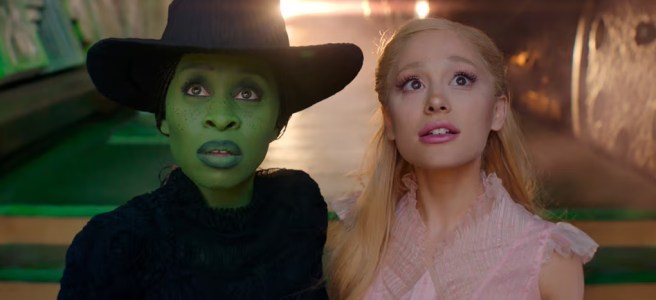
Think you’ve seen everything imaginable in video games? If so, you might want to read Harold Goldberg’s review of Sony’s Astro Bot. Goldberg speaks as an expert who has been playing, analyzing, and reviewing video games for over 15 years, most recently in this regular column for the New York Times that was launched in 2024. Let’s see if he intrigues you enough to give this game a try!

Continue reading “Astro Bot Review: All History Lessons Should Be This Fun”

Philip Gove and “Our Word”

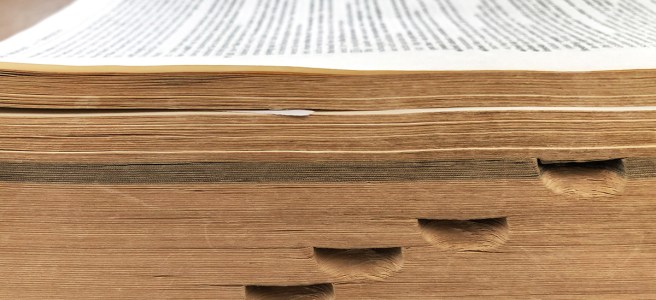
Closeup view of a large dictionary viewed from the side. The book is open, and the yellowed edges of pages with thumb tabs are visible.

Image credit: Rosmarie Voegtli (rvoegtli/Flickr)

If we think about dictionaries at all, we mostly tend to think about them in a fairy tale way—that is, they simply appear, whole and complete, in the fullness of their power, delivered by some mythical being, probably one with wings. But where do dictionaries come from? Who writes them? What words are worthy of inclusion? Who knows? Their very authority defies questioning. But that’s silly, isn’t it? Of course humans make dictionaries, and it’s no small task. Like other grand human activities, dictionary-making involves a lot of debate, controversy, and passionate argument. In this November 2023 essay from American Scholar, writer, editor, and language scholar David Skinner shares a dictionary story that is, well, f*ckin’ epic.

Continue reading “Philip Gove and “Our Word””

That’s Not Actually True

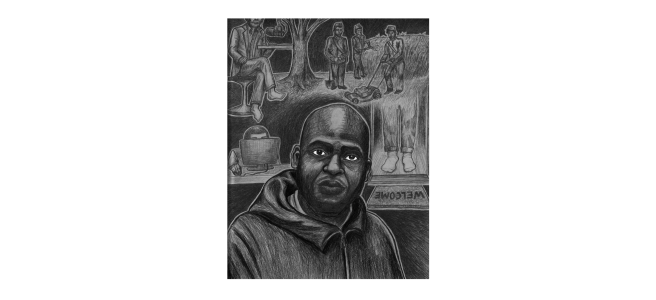
A charcoal drawing with Kiese Laymon’s face in the center surrounded by four smaller images from the essay: a person behind a computer screen, Laymon in stocking feet sitting with a microphone, confederate soldiers doing lawn work, and a figure in stocking feet standing in a doorway behind a Welcome mat.

Image credit: Billy Dee

Today is Tuesday. That’s not actually true. Well, it might be. It depends. The truth is, well, complicated sometimes. Kiese Laymon, who describes himself as a “Black southern writer,” is an English professor and winner of several prestigious awards including the 2022 MacArthur Genius Grant. His novels and essays explore conditions of race, class, body image, and more. In this 2019 essay from Scalawag magazine, he deftly employs the refrain “that’s not actually true” to explore some of the jagged boundaries between experience and expectation, reality and perception, and history and possibility, all regions where everything gets tossed together in a jumble of contradictions. His conclusion makes clear, however, that what he is actually addressing are the effects of centuries of racism embodied in the inner life of a 21st century Black southern writer.

Continue reading “That’s Not Actually True”

The Washington Post Takes the “Unusual Step” of Publishing Graphic Photos from Mass Shootings

A flat, grassy field lined with rows of simple grave markers that form a geometric pattern; the Washington Monument stands in the background.

Image credit: Joe Flood

It’s not news to any of us that mass murders are alarmingly common here in the US. Most of us can rattle off place names—Sandy Hook, Uvalde, Parkland, Las Vegas, and numerous others. Many of us can name shooters, and sometimes we remember the names of the people whose lives were so senselessly ended. But those are names and words; what about images? For many good reasons, news organizations seldom publish photos or video of the grisly scenes. In November 2023, however, the Washington Post, a large-circulation daily newspaper, published mass shooting photos and interview snippets in a report titled “Terror on Repeat: A rare look at the devastation caused by AR-15 shootings.” The Post’s report was so unprecedented that Nieman Lab, a journalism watchdog and research organization affiliated with Harvard University, documented the process that the Post followed in a November 2023 report written by Nieman Lab’s deputy editor, Sarah Scire.

Continue reading “The Washington Post Takes the “Unusual Step” of Publishing Graphic Photos from Mass Shootings”

How Hair Discrimination Affects Black Women at Work

Black and white photo of a young Black woman with an elaborate hairdo shown from the neck up; the background is solid green with purple dots.

Image credit: HBR Staff/Suad Kamardeen/Unsplash

A person’s job may involve talking with clients, solving logistical problems, operating a drill press, analyzing data, supervising a team of interns, or any of a zillion other workplace tasks. What does their hairdo have to do with their job performance? Silly question? Think again. Janice Gassam Asare, writer and CEO of a diversity consulting firm, discusses the everyday reality of hair discrimination faced by Black women in the workplace, and she lays out some concrete steps for addressing the problem. Her May 2023 report appears in the Harvard Business Review.

Continue reading “How Hair Discrimination Affects Black Women at Work”

Why Are So Many Cakes Named After Fabric?

In the center of a white table is a 3-layer yellow cake on a rimmed plate, with thick white frosting spread with peaks. The top of the cake is ringed with pecan halves, and several ripe figs adorn the center. Two slices cut from the cake are on plates on the table, along with a few more plates, forks, and a cake server.

Image credit: Photo by Joseph De Leo, Food Styling by Erika Joyce

Red velvet, black satin, lemon chiffon. We could be talking about fashion here, but we’re not. We’re talking about cake. It turns out (you likely have never noticed) that many classic cakes in the US take their names from fabrics. Curious, right? But once you read the analysis and explanation of food writer and chef Brandon Summers-Miller in this June 2022 Epicurious article, it will all start making sense (and make you hungry, as well).

Continue reading “Why Are So Many Cakes Named After Fabric?”

Warped Front Pages

Stacks of thick and glossy fashion magazines on a newstand. A copy of the New York Times is displayed on top of the magazine stacks.

Image credit: Charles Guerin/Abaca/Sipa USA(Sipa via AP Images)

Do mainstream, large-circulation daily newspapers offer non-biased coverage of national news? Good question. Depending on whom you ask, responses will probably be Hard Yes, Hard No, and all points in between. To find a more concrete and precise answer to the question, a team of research analysts made a systematic study of the front pages of two major national newspapers, the New York Times and the Washington Post, during two specific periods leading up to national elections. David M. Rothschild is senior principal researcher at Microsoft Research; his four co-authors include academics and researchers. Their report was published by the Columbia Journalism Review, an online research and watchdog organization, in November 2023.

Continue reading “Warped Front Pages”

This Full Page Ad Was Written Entirely in Chicken

A red chicken stands on a printed page as if reading it; the title on the page, in large letters, is “Bawk bawk ba-kawk bawk.”

Do chickens talk? What a silly question! Of course they do; ask any child. So maybe we shouldn’t be surprised to learn that they can read as well. We have the evidence right here: a letter composed in chicken language, signed by the Founder and CEO of Upside Foods (a human), and addressed to all chickens. The letter appeared as a full-page ad in the New York Times in November 2022 (really!). Advertising journalist Tim Nudd gives a full report on it for Muse by Clio, an advertising industry periodical.

Continue reading “This Full Page Ad Was Written Entirely in Chicken”