Evanston, Illinois, Approved Reparations. Except It Isn’t Reparations.

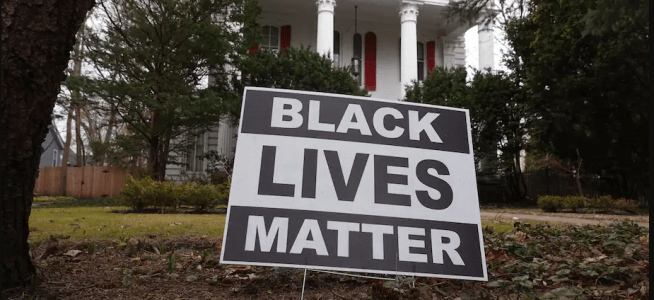
Black Lives Matter lawn sign in the front yard of a large white house.

The Chicago suburb of Evanston, Illinois, has received a lot of national attention for initiating a plan that they’re calling “reparations.” The plan acknowledges and takes steps toward redressing the town’s complicity in a long history of housing practices that have knowingly and intentionally discriminated against Black people, who currently comprise 16% of the town population, according to census data. Arts consultant A. Kirsten Mullen and economist William A. Darity Jr., authors of the 2020 award-winning book From Here to Equality, wrote this March 2021 essay on Evanston’s plan for the Washington Post.

Continue reading “Evanston, Illinois, Approved Reparations. Except It Isn’t Reparations.”

How Covid-19 Gave Me Back My Southern Accent

A drawing of a set of dentures wearing a cowboy hat and cowboy boots.

We already know all about how the world around us changed in 2020, how we had to modify, adjust, and adapt along with it. We’ve read and discussed all the effects, all the angles; we know all about it. One major aspect of life, though, may have gone unexamined: language habits. Journalist and culture critic Tracy Moore is surprised to notice a change in her own speech, and she relates her experience with it in this March 2021 Washington Post essay.

Continue reading “How Covid-19 Gave Me Back My Southern Accent”

For Political Cartoonists, the Irony Was That Facebook Didn’t Recognize Irony

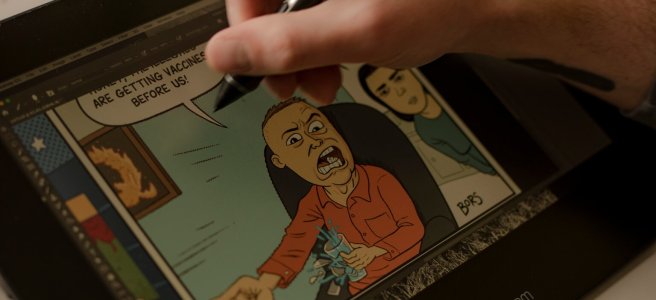
A political cartoon about vaccines is being drawn on a tablet.

Have you ever made an ironic remark and had it misinterpreted or misunderstood? Us, too. It happens. In a real-time conversation, you might be able to explain and repair the conversation. Indeed, when the context and intention are clear enough, many potential misunderstandings don’t happen in the first place. On social media, though, things can get more complicated, and ironic intent may not be recognized. New York Times technology correspondent Mike Isaac wrote this March 2021 report on Facebook’s ironic irony problem.

Continue reading “For Political Cartoonists, the Irony Was That Facebook Didn’t Recognize Irony”

After a Century of Dispossession, Black Farmers Are Fighting to Get Back to the Land

A man stands inside a greenhouse, looking directly at the camera without smiling.

Racism and agriculture—are they related? Do squirrels climb trees? Using historical background, current statistics and trends, and descriptions of Black farmers and organizations, Tom Philpott presents a detailed report of a complicated situation. Philpott is an award-winning journalist and Mother Jones food and agriculture correspondent; his report is from the May+June 2021 edition of the magazine.  

Continue reading “After a Century of Dispossession, Black Farmers Are Fighting to Get Back to the Land”

NCAA Gender Inequity Cuts Deeper Than Just Weight Room Issues at Tournament

A girl holding an NCAA Division-I Final Four trophy from 2017 smiles, surrounded by her teammates.

Gender disparity in the NCAA? We’re shocked! Flabbergasted! Just kidding. Not shocked at all. Still, the degree of inequality that came to light during the 2021 NCAA basketball tournaments was a little startling. Newsweek sports editor Scott McDonald details the situation in this March 2021 report.

Continue reading “NCAA Gender Inequity Cuts Deeper Than Just Weight Room Issues at Tournament”

Would Honey the Duck Come Back This Spring?

Two ducks floating in a body of water.

In addition to the human dramas that play out daily in our towns and cities, the wildlife that live among us have their own dramas, too. And sometimes those dramas intertwine. A university biologist in Chicago, whose office looks out on the school’s Botany Pond, has watched and looked after a particular migratory duck who has returned to the pond for each of the last five years. Mary Schmich, Pulitzer Prize-winning columnist for the Chicago Tribune, has documented this intertwined drama of the duck and the professor several times; this March 2021 column is the latest chapter of the ongoing tale.

Continue reading “Would Honey the Duck Come Back This Spring?”

Let’s Talk, Longhorns

A drawing of overlapping hands of several skin tones, some with nails painted blue and pink.

One of the most lauded features of US higher education is the opportunity it provides for interacting in meaningful ways with people from diverse backgrounds and experiences. Hmmm. How well are we doing in that area? Plenty of room for improvement, right? Morgan Pace, student at the University of Texas at Austin, home of the Longhorns, offers a suggestion in this July 2020 editorial in the university newspaper, The Daily Texan.

Continue reading “Let’s Talk, Longhorns”

The Case for Capitalizing the B in Black

The word "black," all in lowercase, with the first letter underlined in red three times.

It’s a tiny detail in writing with huge implications in social reality. Wait. What? It’s tiny and huge at the same time? Really? Well, yes, really. Unless you pay a lot of attention to the inner workings of news media, publishers, and language usage guides, you might not have noticed the extensive recent discussions about the capitalization (or not) of the words black and white when they refer to social identities of people. Kwame Anthony Appiah, author and professor of philosophy and law, details the issues involved in this June 2020 essay in The Atlantic. (And by the way, who makes the ultimate decisions about what is correct? As Appiah notes, “language is a set of conventions, to be determined by the consensus of language users.” In other words, we do.)

Continue reading “The Case for Capitalizing the B in Black”