
The Washington Post Takes the “Unusual Step” of Publishing Graphic Photos from Mass Shootings

A flat, grassy field lined with rows of simple grave markers that form a geometric pattern; the Washington Monument stands in the background.

Image credit: Joe Flood

It’s not news to any of us that mass murders are alarmingly common here in the US. Most of us can rattle off place names—Sandy Hook, Uvalde, Parkland, Las Vegas, and numerous others. Many of us can name shooters, and sometimes we remember the names of the people whose lives were so senselessly ended. But those are names and words; what about images? For many good reasons, news organizations seldom publish photos or video of the grisly scenes. In November 2023, however, the Washington Post, a large-circulation daily newspaper, published mass shooting photos and interview snippets in a report titled “Terror on Repeat: A rare look at the devastation caused by AR-15 shootings.” The Post’s report was so unprecedented that Nieman Lab, a journalism watchdog and research organization affiliated with Harvard University, documented the process that the Post followed in a November 2023 report written by Nieman Lab’s deputy editor, Sarah Scire.

Continue reading “The Washington Post Takes the “Unusual Step” of Publishing Graphic Photos from Mass Shootings”
Warped Front Pages

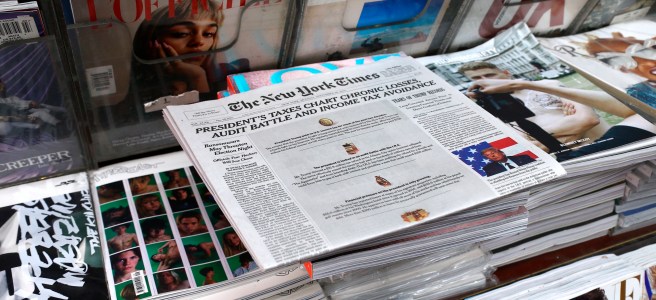
Stacks of thick and glossy fashion magazines on a newstand. A copy of the New York Times is displayed on top of the magazine stacks.

Image credit: Charles Guerin/Abaca/Sipa USA(Sipa via AP Images)

Do mainstream, large-circulation daily newspapers offer non-biased coverage of national news? Good question. Depending on whom you ask, responses will probably be Hard Yes, Hard No, and all points in between. To find a more concrete and precise answer to the question, a team of research analysts made a systematic study of the front pages of two major national newspapers, the New York Times and the Washington Post, during two specific periods leading up to national elections. David M. Rothschild is senior principal researcher at Microsoft Research; his four co-authors include academics and researchers. Their report was published by the Columbia Journalism Review, an online research and watchdog organization, in November 2023.

Continue reading “Warped Front Pages”

What Really Made Geoffrey Hinton into an AI Doomer

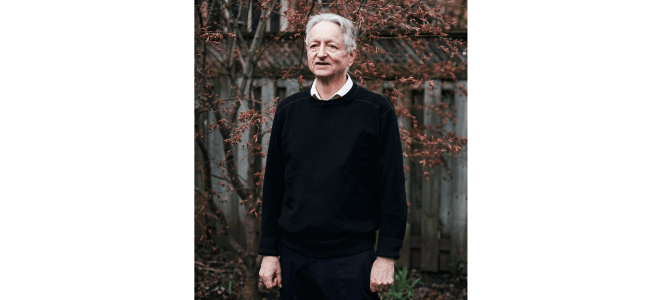
Geoffrey Hinton standing in a backyard.

Image credit: CHLOE ELLINGSON/REDUX

Does the name Geoffrey Hinton mean anything to you? It might not; he never won an election, a Grammy, or a Super Bowl ring. But in the world of cybertechnology and artificial intelligence (AI), he’s more than a rock star, and he made a lot of headlines in May 2023 when he left his job at Google and began publicly expressing his alarm about recent developments in AI. Will Knight, who covers AI as a senior writer for Wired, spoke with Hinton and wrote this May 2023 report.

Continue reading “What Really Made Geoffrey Hinton into an AI Doomer”

Influencer Parents and the Kids Who Had Their Childhood Made Into Content

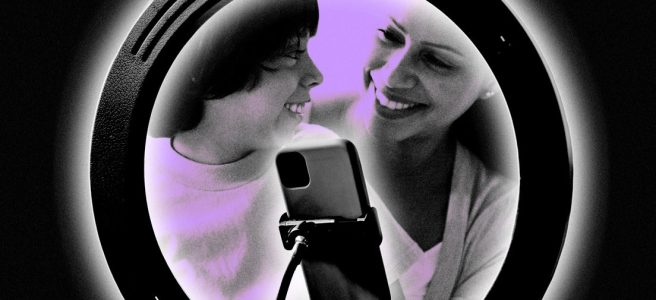
A small child sits on the lap of a woman; they gaze at one another, smiling. In front of them, a ring light and a smartphone on a gooseneck stand.

Image credit: JOSE LUIS PELAEZ INC

How would you feel about seeing photos of yourself on social media for all the world to see (especially if you didn’t put them there yourself)? This may not be a hypothetical question; many of us have likely had that very experience. For some, it might cause some blushing, a chuckle, and no big deal; life goes on, what’s for dinner? But in some cases—particularly those involving children, who typically don’t get to make their own decisions about it—there is a danger of it being a Very Big Deal and not a pleasant one. Journalist Fortesa Latifi details some cases of childhood being used as content in this March 2023 Teen Vogue report.

Continue reading “Influencer Parents and the Kids Who Had Their Childhood Made Into Content”

How Online Mobs Act Like Flocks of Birds

Still frame from a computer simulation of a murmuration of birds swooping and swirling across the screen.

Image credit: Noema

Have you ever watched a group of birds flying together, making swirling, looping patterns in the sky, and thought, “Wow! I wish we humans could do that!”? Well, we kind of already do, at least on social media. Renée DiResta, technical research manager at Stanford Internet Observatory, uses the metaphor of a murmuration of birds (that’s what it’s called) to describe our social media behavior. In this November 2022 essay in Noema, she analyzes some of our most problematic social media behavior and makes some recommendations for addressing the problems.

Continue reading “How Online Mobs Act Like Flocks of Birds”

Yes, This New York County Actually Used the Crazy Spider Voting Sticker Design That You Saw Online

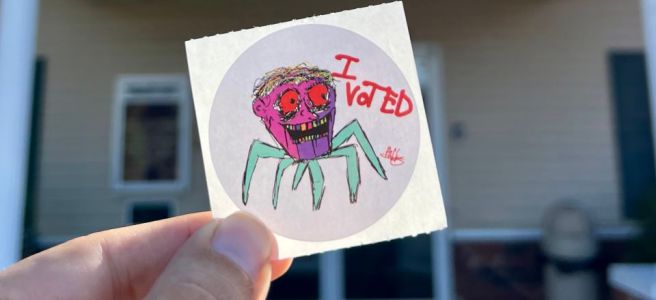
A round “I voted” sticker shows a childish drawing of a green-legged spider figure with a smiling human head. The face is in shades of purple with big red eyes and multicolor teeth.

Image credit: CNN

News giant CNN publishes a detailed report about an “I voted” sticker that is being distributed in a medium-sized county in New York. Wait. This is newsworthy?! Really? “I voted” stickers are usually the most yawn-inducing bits of civic display imaginable. Well, not this time, and not in Ulster County, New York, where the winning entry in a county-wide contest shows a childish drawing of a brightly colored monster with insect legs and a scary human face that says “I voted.” CNN reporter Zoe Sottile filed this report in November 2022.

Continue reading “Yes, This New York County Actually Used the Crazy Spider Voting Sticker Design That You Saw Online”

How and Why Do Consumers Access News on Social Media?

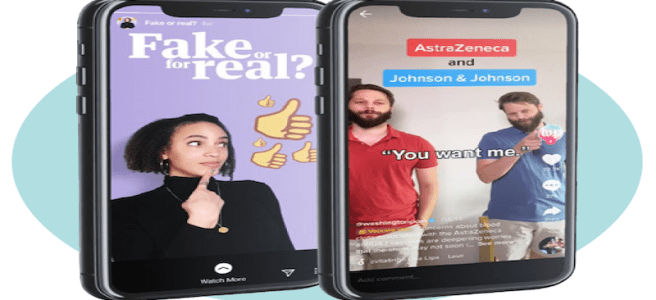
Two cell phones side by side, one showing a screen grab from the Guardian’s “Fake or for Real” feature, the other showing a screen grab of a Washington Post TikTok.

Image credit: Reuters Institute

It’s not news that fewer people than ever get their news from newspapers. Many people, particularly younger ones, use social media to stay informed of events. But how many people? Who are they? Which platforms do they use? And why have these become the sources of choice? Good questions, right? Political science professor Simge Andı researched them extensively; her detailed report was published in June 2021 by Reuters Institute for the Study of Journalism.

Continue reading “How and Why Do Consumers Access News on Social Media?”

Nobel Prize Lecture 2021

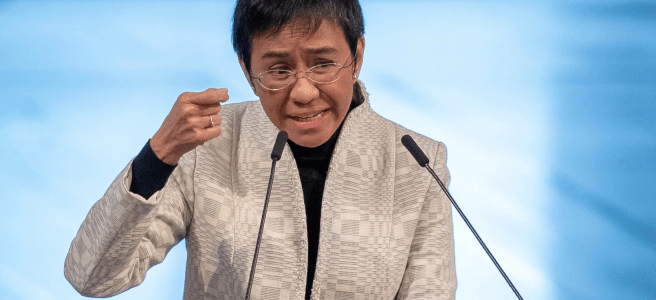
Maria Ressa is delivering her Nobel Prize Lecture and making an emphatic gesture.

Image credit: Rappler

Maria Ressa, in her 2021 Nobel Peace Prize lecture, states it bluntly and succinctly: “Without facts, you can’t have truth. Without truth, you can’t have trust. Without trust, we have no shared reality, no democracy.” Ressa has a rare ability to acknowledge and expose the horrors of the world and still inspire optimism; her address is a call to action, a call to conscience. We’ve excerpted it for you here. You can also read a transcript/translation of her complete speech on these sites: Rappler.com (in English or Filipino) or NobelPrize.org (in English, Russian, or Norwegian). 

Continue reading “Nobel Prize Lecture 2021”