If you pay any attention to economic news, you’re aware that the US stock market is flourishing, profits are high and rising for a large number of US businesses, worker productivity has increased tremendously, and worker wages are…stagnant. Or worse. Depending on how worker income is measured in relation to cost of living, the buying power of worker incomes has fallen substantially over several decades. There is no silver bullet, no magic fix, but there are many possibilities for remedying the situation. LaGuardia Community College student Qing Zhang is proposing in this essay that profit sharing could go a long way towards helping workers and the economy at the same time.
Continue reading “A Profit-Sharing Proposal”Evanston, Illinois, Approved Reparations. Except It Isn’t Reparations.
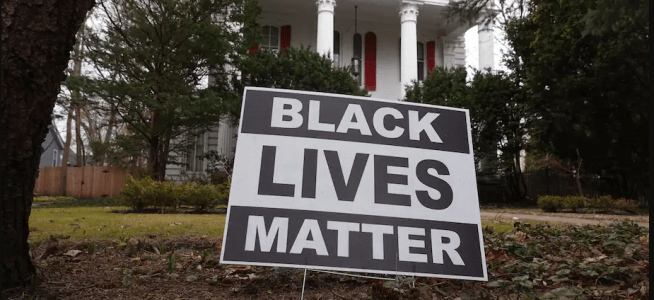
The Chicago suburb of Evanston, Illinois, has received a lot of national attention for initiating a plan that they’re calling “reparations.” The plan acknowledges and takes steps toward redressing the town’s complicity in a long history of housing practices that have knowingly and intentionally discriminated against Black people, who currently comprise 16% of the town population, according to census data. Arts consultant A. Kirsten Mullen and economist William A. Darity Jr., authors of the 2020 award-winning book From Here to Equality, wrote this March 2021 essay on Evanston’s plan for the Washington Post.
Continue reading “Evanston, Illinois, Approved Reparations. Except It Isn’t Reparations.”How Covid-19 Gave Me Back My Southern Accent
We already know all about how the world around us changed in 2020, how we had to modify, adjust, and adapt along with it. We’ve read and discussed all the effects, all the angles; we know all about it. One major aspect of life, though, may have gone unexamined: language habits. Journalist and culture critic Tracy Moore is surprised to notice a change in her own speech, and she relates her experience with it in this March 2021 Washington Post essay.
Continue reading “How Covid-19 Gave Me Back My Southern Accent”Eulogy for Kobe Bryant (excerpt)
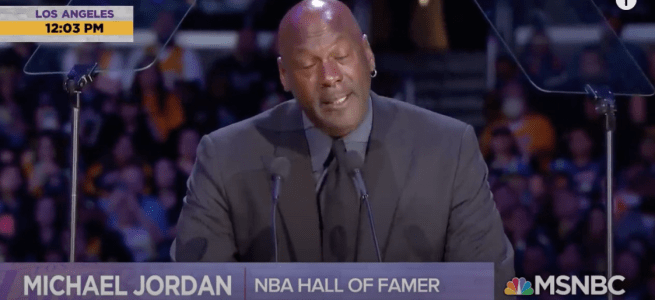
Michael Jordan is a former superstar basketball player who dominated the NBA for more than a decade until his final retirement in 2003, but you probably already know that, even if you’re not a fan. You likely also know that Kobe Bryant was a superstar basketball player for the Los Angeles Lakers who died at age 42 in a helicopter crash. Here is an excerpt from Jordan’s eulogy at a memorial service for Bryant held at the Staples Center, the Lakers’ home arena, on February 24, 2020.
Continue reading “Eulogy for Kobe Bryant (excerpt)”For Political Cartoonists, the Irony Was That Facebook Didn’t Recognize Irony
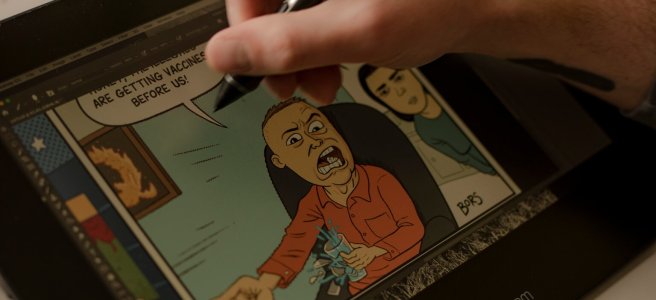
Have you ever made an ironic remark and had it misinterpreted or misunderstood? Us, too. It happens. In a real-time conversation, you might be able to explain and repair the conversation. Indeed, when the context and intention are clear enough, many potential misunderstandings don’t happen in the first place. On social media, though, things can get more complicated, and ironic intent may not be recognized. New York Times technology correspondent Mike Isaac wrote this March 2021 report on Facebook’s ironic irony problem.
Continue reading “For Political Cartoonists, the Irony Was That Facebook Didn’t Recognize Irony”After a Century of Dispossession, Black Farmers Are Fighting to Get Back to the Land
Racism and agriculture—are they related? Do squirrels climb trees? Using historical background, current statistics and trends, and descriptions of Black farmers and organizations, Tom Philpott presents a detailed report of a complicated situation. Philpott is an award-winning journalist and Mother Jones food and agriculture correspondent; his report is from the May+June 2021 edition of the magazine.
Continue reading “After a Century of Dispossession, Black Farmers Are Fighting to Get Back to the Land”Manoomin: Food that Grows on the Water
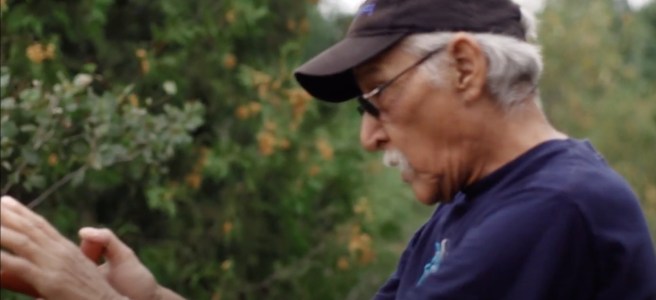
In English, it’s called “wild rice”; in the languages spoken by Anishinaabe people, a culturally related group that includes the Ojibwe, Chippewa, and other indigenous peoples, the food is called “manoomin.” (If you listen carefully, you’ll be able to pick out the word “Anishinaabe” in the invocation/prayer spoken at the beginning of the video.) This manoomin has tremendous importance to the Anishinaabe people, not only for its high nutritional value, but also for its cultural significance. 21st century technology and socio-political conditions in the Anishinaabe region are encroaching on the relationship between manoomin and the people who rely on it for material and spiritual sustenance. In this video, Fred Ackley Jr. of the Sokaogon Chippewa Community describes the gathering of manoomin and explains its significance; the video was produced in February 2020 by PBS Wisconsin Education.
Continue reading “Manoomin: Food that Grows on the Water”NCAA Gender Inequity Cuts Deeper Than Just Weight Room Issues at Tournament
Gender disparity in the NCAA? We’re shocked! Flabbergasted! Just kidding. Not shocked at all. Still, the degree of inequality that came to light during the 2021 NCAA basketball tournaments was a little startling. Newsweek sports editor Scott McDonald details the situation in this March 2021 report.
Continue reading “NCAA Gender Inequity Cuts Deeper Than Just Weight Room Issues at Tournament”